7 Common Pomegranate Growing Mistakes and How to Avoid Them
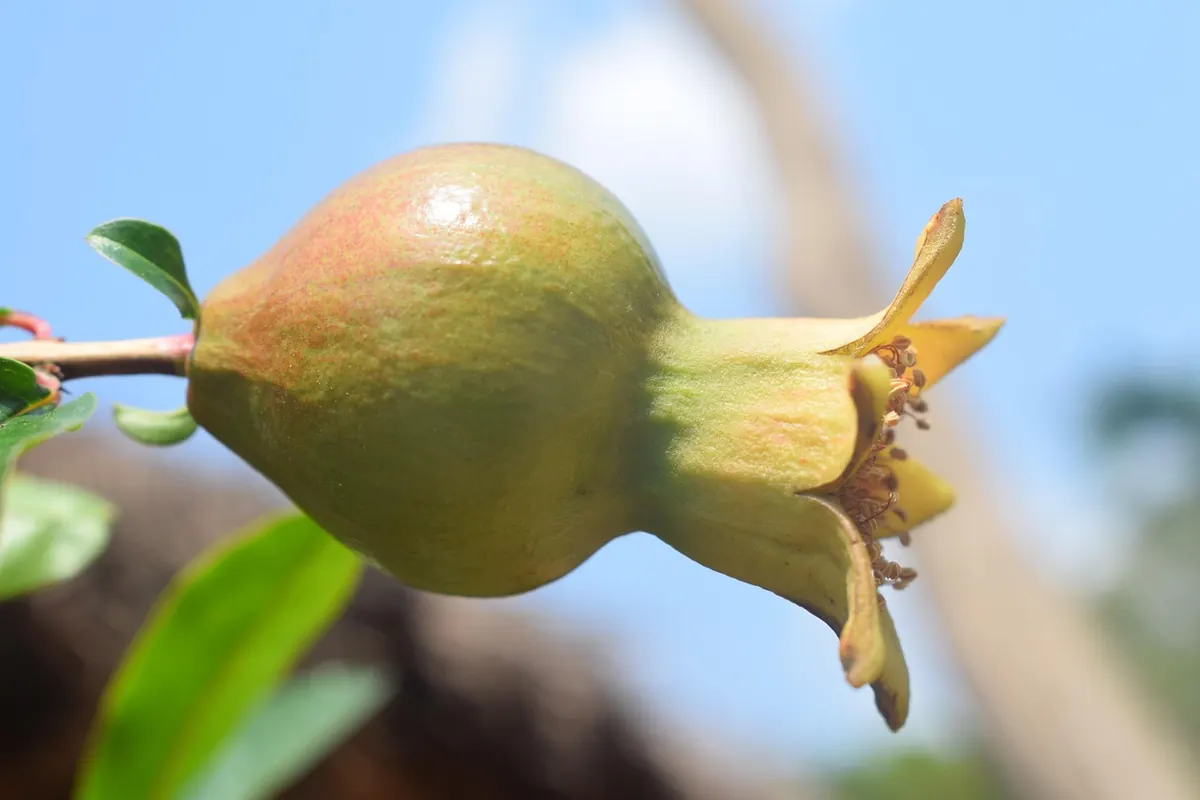
Pomegranates have a reputation for being tough, and mostly they earn it. They tolerate dry summers, lean soil and a certain amount of neglect, and a well-sited bush can crop for decades with very little fuss. Which is exactly why so many disappointing harvests are puzzling: the plant looks healthy, it flowers, and then nothing. Or the fruit splits just before ripening. Or the whole thing sulks for three years and produces a handful of small, hard specimens.
In almost every case, the cause is one of a small number of mistakes made early and repeated every season. None of them are dramatic. They are the kind of habits that seem harmless in spring and only show up in August. Here are the seven that matter most, with the fix for each.
1. Watering on a Schedule Instead of by Feel
Overwatering is the most common way to kill a young pomegranate, and it rarely looks like drowning. The first signs are yellowing lower leaves, a few dropped leaves, and growth that slows to nothing. In containers, push a finger into the soil: if it is still damp two knuckles down, wait. Sour-smelling soil and a crust of algae on the surface mean the roots have been sitting wet for too long.
Pomegranates are adapted to dry, well-drained ground and they resent constant moisture. Once established, a deep soak every ten days to two weeks in hot weather is usually plenty, letting the top few inches dry in between. Younger plants and containers need more attention, but the principle holds: soak thoroughly, then wait.
The opposite error causes its own damage. Letting a bush dry out hard and then flooding it is the classic cause of split fruit in late summer, when the skin has already toughened and the inside suddenly swells. Steady, deep watering through the fruit-swelling weeks, plus a mulch ring that keeps moisture even, does more for fruit quality than any fertiliser.
2. Planting in Shade and Hoping for Fruit
Pomegranates fruit in full sun, and "full" means at least six hours of direct light, with eight or more being better in cooler climates. In shade they grow leggy, produce few flowers, colour poorly and attract more fungal trouble. A bush that gets morning sun but sits in shadow from midday onward will often flower and then drop everything.
Check the actual path of the sun before you dig, not just how the spot looks at noon in June. Remember that a low winter sun casts longer shadows, and that a hedge or young tree next door will keep growing. In very hot climates, some afternoon shade is a genuine advantage and helps prevent sunscald on exposed fruit, but that is a different situation from a plant that never sees the sun at all. If your only option is a shady bed, grow the pomegranate in a large container and move it.
3. Pruning at the Wrong Time, or Far Too Hard
Timing is where most pruning goes wrong. Cutting in autumn or early winter stimulates tender growth that a frost will damage, and it leaves wounds open through the wettest months. Pruning in late spring is worse in a different way, because you are removing the wood that carries this season's flowers.
Prune in late winter or very early spring, just as growth is about to restart and the risk of hard frost has passed. Keep it light: pomegranates flower on new growth pushed from older wood, so a hard cutback costs you a year of fruit.
- Wait until the last serious frost is behind you but before buds begin to swell.
- Remove dead, damaged and crossing branches first, and stop to look before going further.
- Cut out suckers around the base unless you are deliberately raising a new stem.
- Keep four to six strong stems on a bush, or a single trunk with three to five scaffold branches.
- Open the centre so light and air reach the interior, rather than shearing the outside into a ball.
- Avoid removing more than roughly a quarter of the canopy in any one year.
4. Leaving Pollination to Chance
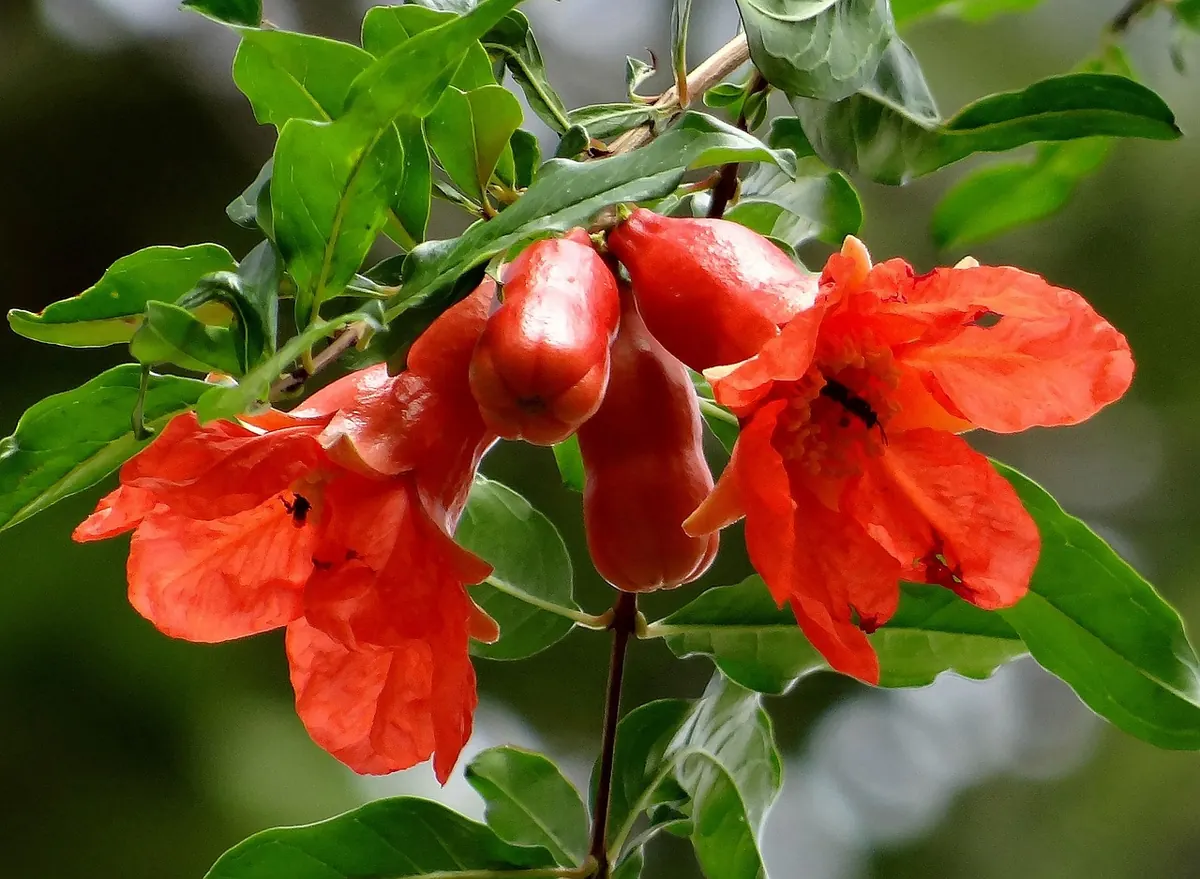
Pomegranates carry two kinds of flower. The vase-shaped ones with a swollen base are the fruit-bearing type; the bell-shaped ones with a narrow base are functionally male and will drop no matter what you do. That alone explains why some gardeners see dozens of flowers and almost no fruit.
Most varieties are self-fruitful, but cross-pollination improves both the amount and the size of the crop. Planting a second variety that flowers at the same time is the simplest fix, and it also gives you a longer harvest. Bees do the rest, so avoid spraying anything on open flowers, and let a few herbs or wildflowers grow nearby to bring pollinators in.
If your bush flowers heavily and sets almost nothing, try hand pollination on a still morning: touch a soft brush or cotton bud to the pollen-bearing flowers, then to the receptive tip of a vase-shaped one. It takes a few minutes and often makes a visible difference on a small tree.
5. Planting Too Deep, or Choosing the Wrong Variety
A buried crown is slow death. Set the plant so the top of the root mass sits level with the surrounding soil, in a hole twice as wide as the roots but no deeper. Mounding soil up around the stem, or mulching right against it, invites rot and encourages a thicket of suckers.
Variety choice matters just as much, particularly where the season is short. Famous red varieties such as Wonderful are late to ripen and need a long, hot summer to sweeten properly. Earlier, softer-seeded types will crop reliably in cooler regions, and in marginal climates it is worth planting against a warm south-facing wall or growing in a container that can be moved under cover for winter. Cold hardiness varies by variety, so ask locally rather than guessing.
A pomegranate in the wrong spot will grow happily for years and never give you a single fruit.
6. Feeding for Leaves Instead of Fruit
Pomegranates are not hungry plants, and a generous dose of high-nitrogen fertiliser produces exactly what you would expect: lush green growth, very few flowers, soft wood that winter damages, and pale fruit. A wheelbarrow of compost in spring is usually enough for a garden plant, with a balanced feed only if growth is genuinely weak.
- Keep lawn fertiliser away from the root zone; the runoff is high in nitrogen.
- Choose a feed with more phosphorus and potassium than nitrogen once the plant is mature.
- Do not feed late in the season, as soft autumn growth is frost-tender.
- In containers, feed modestly and regularly rather than heavily and occasionally.
- Improve tired soil with compost and mulch rather than reaching for a stronger product.
7. Judging Ripeness by the Calendar
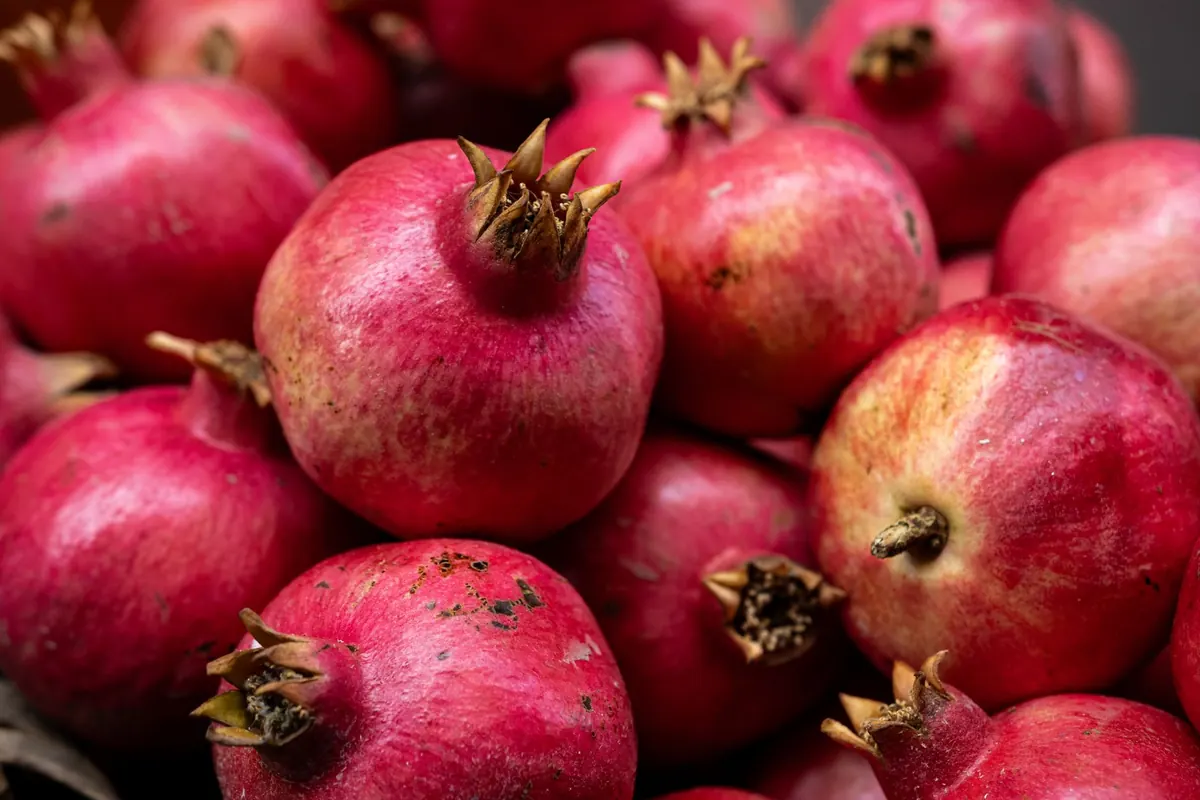
Pomegranates do not ripen after picking, so timing is everything and the calendar is a poor guide. Colour alone is unreliable too: some varieties stay greenish-bronze when perfectly ripe, while others blush red weeks early. Look instead for fruit that has become slightly angular rather than perfectly round, with leathery, dull skin, and tap it with a fingernail. A ripe pomegranate rings with a faint metallic tingle; an underripe one sounds flat and solid.
Pick one, open it and taste before committing to the rest. Harvest in dry weather, cut the fruit off with the cap intact rather than pulling it, and bring in anything that has split immediately, since splitting is a sign of uneven watering rather than ripeness.
What to Do This Season
You do not have to correct everything at once. Start with the site and the watering can, because those two fix more problems than anything else. Check the soil before you water, mulch to keep moisture even, and write down when your bush flowers and when the fruit colours so next year's pruning and picking are timed by observation rather than habit.
Then add one more variety for pollination, prune lightly in late winter, and taste before you harvest. Pomegranates are forgiving plants; give them sun, drainage and steady water, and they will reward you for a very long time.
Photo: ajaykhadka / Pixabay