How to Harvest and Store Pomegranates Without Splitting
Few garden disappointments are as sharp as the pomegranate that has been swelling on the branch since spring, only to crack open a week before you meant to pick it. From the path it looks perfect. Then you lift it and find a split running down from the crown, arils exposed and already softening. Splitting is partly weather, partly timing, and partly how the fruit is handled after it leaves the tree. You cannot do much about a heavy rain in October. Almost everything else is within your control.
Reading the Signs of Ripeness
Pomegranates do not ripen after picking the way peaches or pears do. Whatever sweetness and colour the arils hold on the day you cut the stem is what you will taste in January. That makes the harvest decision the most important one of the season — and it rests on several small clues rather than one obvious one.
Colour tells you less than you think
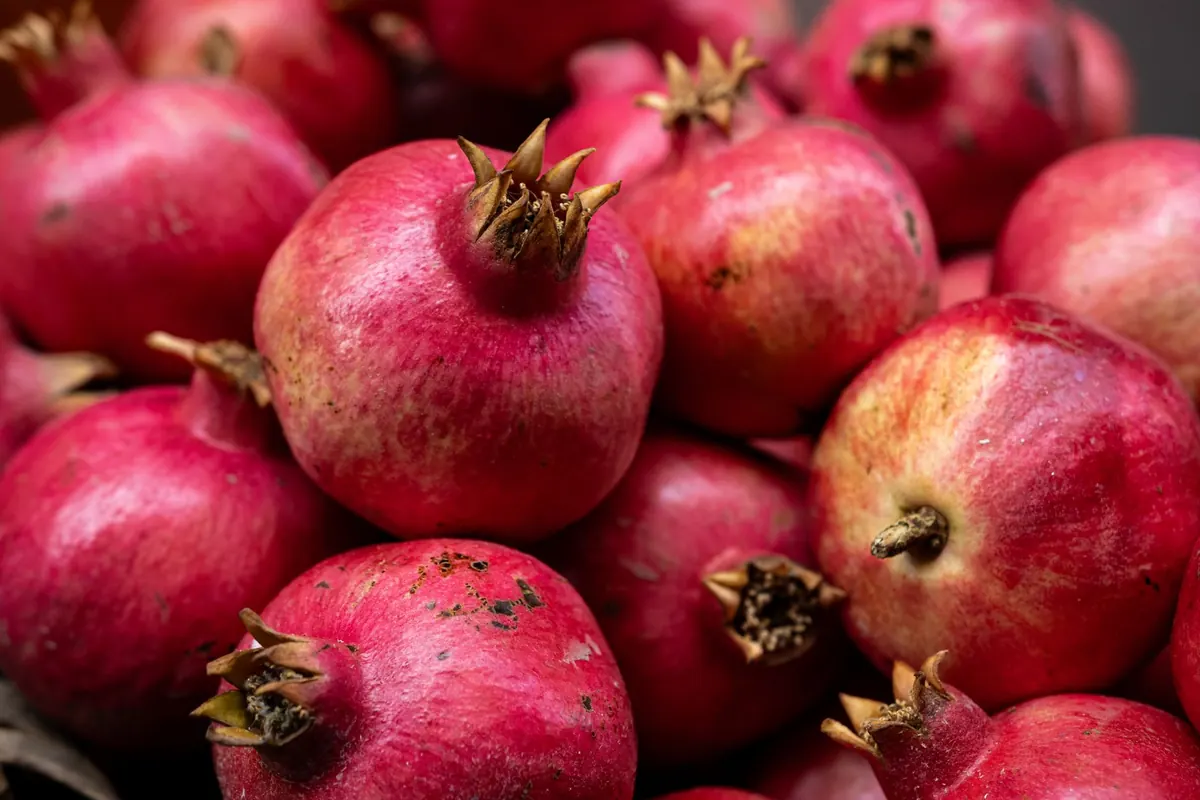
Skin colour depends heavily on the variety. Deep crimson types turn almost black-red when ripe, while others stay pink, bronze, or even faintly green and are perfectly ready. A more useful signal is a fruit that has held the same colour for two or three weeks. Steady colour means steady maturity; a sudden flush of red after a cold night means very little.
The sound, the shape, the weight
Hold a fruit to your ear and tap it with a fingernail. Ripe pomegranates ring lightly, almost metallic. Unripe ones thud dull and heavy. Then feel the sides: as the seed chambers swell, they press the skin into gentle, boxy angles, so a ripe fruit is rarely perfectly round. Finally, weigh it in your palm. Ripe fruit feels dense for its size, like a small bag of marbles.
When you think a tree is close, pick one fruit and cut it open. Deeply coloured, juice-staining arils confirm what the tapping told you. If they are pale and bland, give the tree another ten days to two weeks and check again.
Why Pomegranates Split in the First Place
Nearly all splitting comes down to water and time. The skin stops growing before the arils do, so anything that pushes the seeds outward faster than the skin can stretch ends in a crack.
- Rain after a dry spell. The classic cause. A parched tree takes up a large amount of water quickly and the arils swell overnight.
- Uneven irrigation. Alternating drought and heavy watering does the same thing without any help from the sky.
- Leaving fruit too long. An overripe pomegranate on the tree is a split waiting to happen, especially in wet autumn weather.
- Thin skin. Some varieties simply have less elastic skin, and there is little to do beyond harvesting promptly.
- Rough handling. Fruit dropped into a bucket or piled deep in a crate often splits days later, in storage, along a bruise you never noticed.
The practical response is dull but effective: water evenly through summer, stop heavy irrigation as the fruit colours, and pick on time rather than waiting for the last possible day.
Picking Without Leaving Bruises
A pomegranate has a long stem and hangs heavy. Pulling it off the tree tears the shoulder and starts a split that will open in the crate. Take five extra minutes and do it properly.
- Harvest in the cool of the morning, when the fruit is firm and the tree is shaded.
- Use sharp bypass secateurs rather than twisting or tugging by hand.
- Hold the fruit in one hand and cut the stem about two centimetres above the crown. Never let the fruit fall.
- Place each one into a shallow basket lined with a cloth or a sheet of newspaper. One layer only.
- Keep the basket in the shade as you work; a full day in direct sun softens the skin.
- Work the tree in two or three passes over a few weeks, taking only the fruit that passes the tap test.
Do not wash the fruit at harvest. Surface moisture is the enemy of long storage, and a dry rub with a soft cloth removes dust perfectly well.
Cure Before You Store
This is the step most growers skip, and it makes a real difference. Spread the freshly picked fruit in a single layer on newspaper or slatted trays in a cool, dark, airy room — a garage, a shed, a spare bedroom with the window cracked. Leave them for about a week, turning once. The skin dries and firms slightly, small nicks seal over, and any fruit that was already damaged shows itself now rather than in the middle of your stored crop. Remove those immediately. Curing also takes the field heat out of the fruit gently, which is far better than moving it straight into a cold refrigerator.
Storing Whole Fruit
A well-cured pomegranate keeps for weeks, sometimes two months or more, if you give it the right conditions: cool, dark, dry, and ventilated.
In the refrigerator
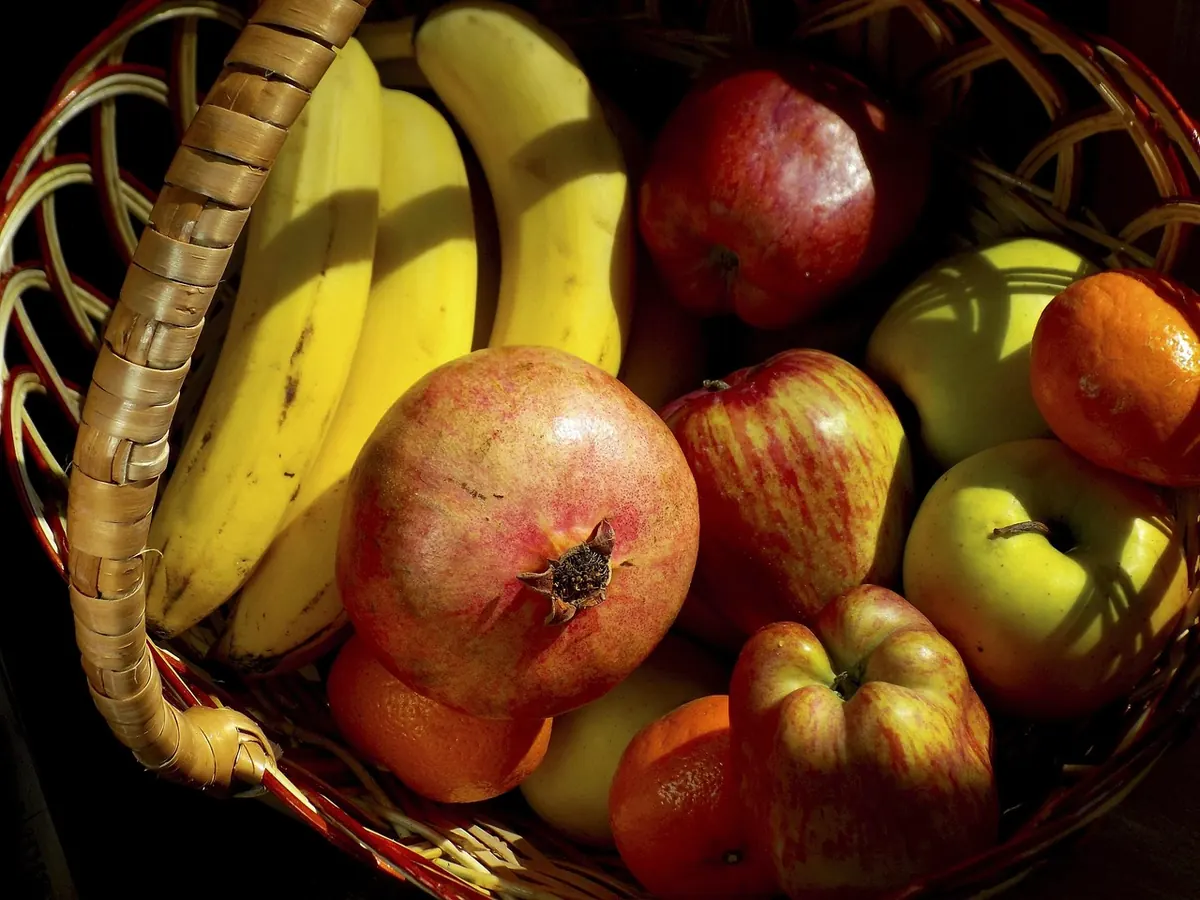
Wrap each fruit loosely in newspaper or place it in a paper bag with a few holes punched through, then set it in the crisper drawer. Whole fruit holds well at around four to seven degrees Celsius. Do not seal it in an airtight container; trapped moisture condenses on the skin and mould follows quickly. Keep pomegranates away from apples and bananas, which release ethylene and speed up the decline of everything nearby.
In a cool room or cellar
Lay the fruit in a single layer in shallow crates lined with newspaper, crowns up, with a little space between each one. A dark, airy spot that stays between five and ten degrees Celsius works well. Never stack more than two deep, and never on top of a fruit with a cracked crown.
Whichever method you choose, check the crop once a week. Lift each fruit; a soft spot or a spongy feel means it should be eaten now. One mouldy pomegranate will spread quickly through a crate, so remove it the moment you see fuzz.
When a Pomegranate Splits Anyway
A split fruit is not a loss, it is simply a fruit with a deadline. Keep it out of storage and deal with it straight away. Score the skin, break it open in a bowl of water so the arils sink and the pith floats, and refrigerate the seeds in a covered container for three or four days.
For longer keeping, freeze the arils: spread them on a tray, freeze until firm, then tip into a bag and seal. They will keep for many months and work well in sauces, dressings, and cooked dishes, though they soften once thawed. Juice freezes beautifully in ice cube trays, and the cubes drop straight into a jug of water or a braise.
A Simple Harvest-Day Routine
Tap a few fruit before you commit to picking. Cut with snips, leaving a short stem, and lay each one gently in a lined basket. Keep everything in the shade, cure the crop for a week in a cool, airy room, and discard anything that softens or splits during that time. Then store single-layer, dry, and dark, and check weekly. Do that and you will still be opening firm, stain-your-fingers pomegranates long after the tree is bare.
Photo: Laila_ / Pixabay