Seasonal Pomegranate Care Checklist: Spring Through Winter
Pomegranates keep their own calendar. Long before the fruit swells and splits its skin, the tree has already decided how the season will go: in the buds it set last summer, in the roots it pushed through winter, in the sugars stored before the leaves dropped. Miss a step and it rarely complains out loud. It just gives you fewer flowers, smaller fruit, or a crop that cracks open in the first heavy rain of October. What follows is the working checklist we come back to each year — what to do, when to do it, and what to leave alone.
Read it once in late winter, then keep the short version somewhere you will actually see it. Seasons overlap, and a garden in mild coastal country does not run to the same clock as one in the hills or a cool northern plot. Treat the months as a rough order of operations rather than a rulebook.
Early Spring: Pruning, Feeding, and a Clean Start
The window opens when hard frosts are behind you but the buds are still tight — often late March, earlier in mild zones, later where cold lingers. Work in this order.
- Prune first. Cut out dead, broken and crossing wood, then take the suckers that pomegranates throw so generously from the base. Choose a shape and stick with it: a bush with three to five main stems, or a single clean trunk. On a mature plant, shorten the long whips of last year's growth by about a third. Do not hack back hard — fruit comes on short spurs on older wood and on the tips of last season's shoots, and heavy pruning trades your flowers for leaves.
- Clear the ground. Rake out old leaves and remove any mummified fruit still hanging or lying beneath the tree. Those wrinkled husks are where rot organisms overwinter.
- Feed. Scatter a balanced granular fertilizer or a few spades of well-rotted compost around the drip line, roughly a handful per year of the tree's age, then water it in. Go easy on nitrogen. Rich, leafy growth looks impressive in May and produces very little in September.
- Mulch. Wait until the soil has warmed properly, then lay five to eight centimetres of straw, bark or leaf mould, keeping it clear of the trunk.
Late Spring to Midsummer: Flowers, Fruit Set, and Pest Patrol
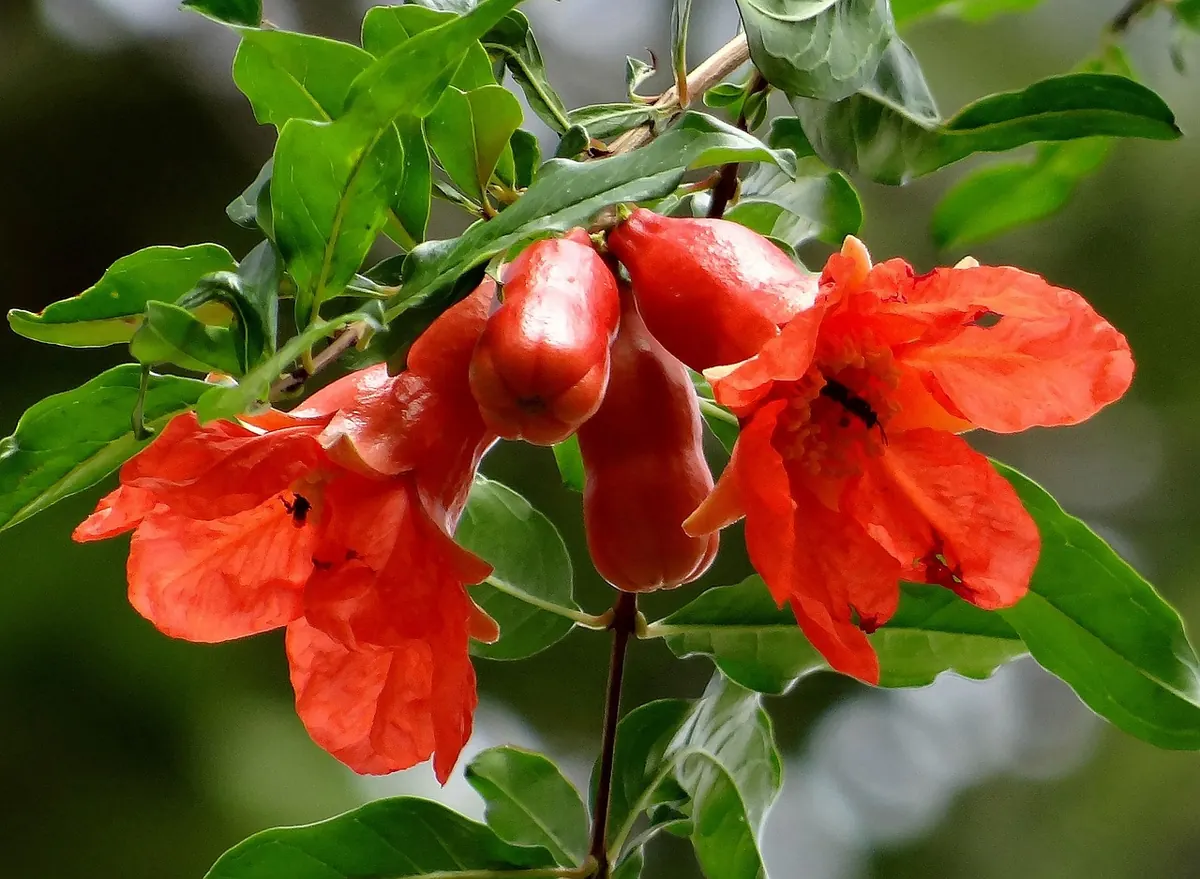
Flowering stretches over several weeks, sometimes in two flushes. Expect a lot of flowers to drop — many are functionally male and never set fruit. A tree that sheds half its blossoms in June is not failing you.
Once the first small fruits are visible, give a light feed leaning towards potassium and keep watering steady. Then walk the tree once a week with your hands behind your back, looking rather than spraying. Check the undersides of new shoots and the calyx end of young fruit, early in the morning when the insects are slow.
What to look for
- Aphids clustering on soft new tips, often with ants in attendance.
- Whitefly and scale on the undersides of leaves, with sticky honeydew or sooty mould below.
- Shield bugs and leaf-footed bugs probing young fruit; the damage shows later as dark, sunken patches.
- In Mediterranean gardens, the pomegranate butterfly, whose larvae bore into fruit and leave frass at the entrance hole.
- Leaf spot and sooty mould in humid summers — thin the canopy slightly if air cannot move through it.
A strong jet of water deals with most aphids. Insecticidal soap handles soft-bodied pests if you catch them early. Never spray while the tree is in flower; the pollinators are doing more for your harvest than any bottle will.
High Summer: Water, Sunburn, and Cracked Fruit
Pomegranates are drought-tolerant, which is not the same as drought-proof. Deep, infrequent watering — a long soak every week or ten days rather than a daily sprinkle — pushes roots down and keeps the tree even. The critical period is fruit swell in late summer, when going from bone dry to flooded and back again is the classic cause of split skins. Pick a rhythm and hold it.
Sunburn is the other summer risk. Fruit suddenly exposed after a heavy thinning, or on a young tree with a sparse canopy, scalds on the sunny side and later turns leathery. Leave some leaf cover over the fruit, and shade the trunks of newly planted trees with a board or a wrap during their first summer. If a heavy set is weighing down the branches, thin the smallest fruits early rather than late. Bagging a few clusters in paper or mesh sleeves is worth the trouble if birds and insects have found your tree in previous years.
Autumn: Reading the Fruit and Closing the Season
Pomegranates do not ripen much after picking, so the decision matters. Judge with your eyes, your knuckles and your teeth, in that order.
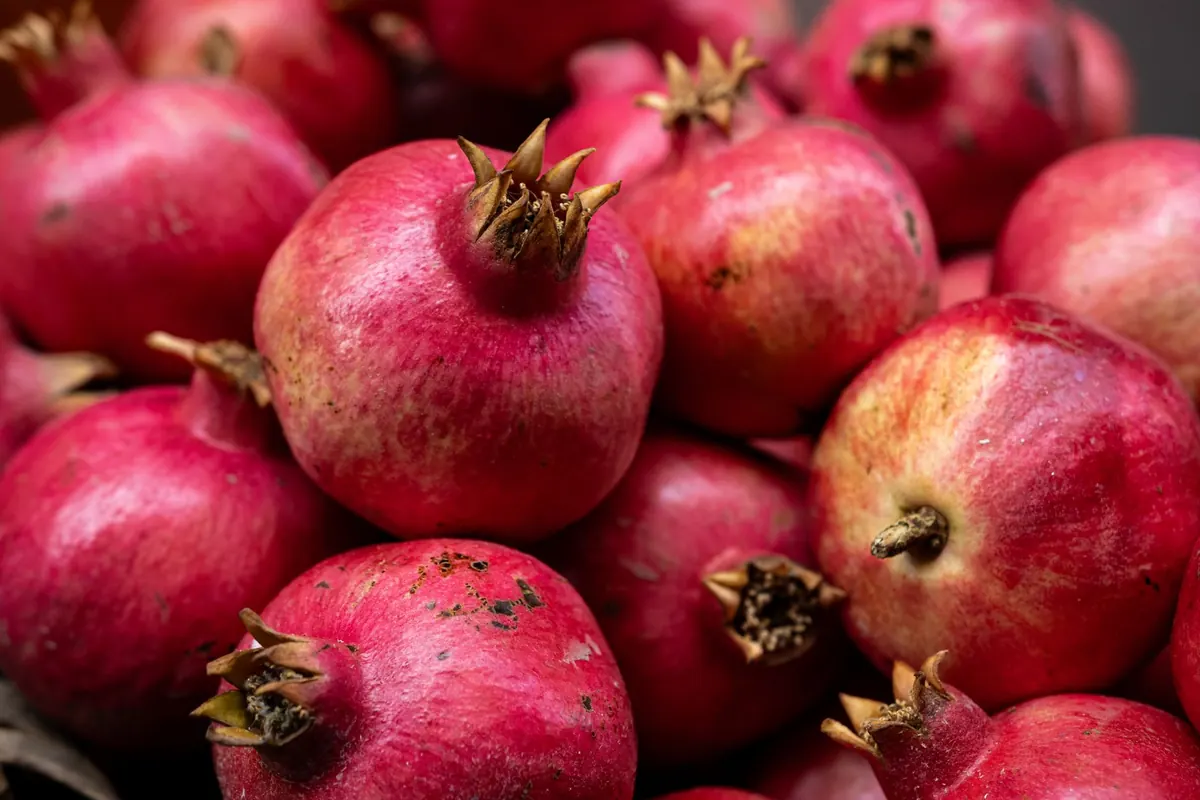
- Colour. The skin deepens and turns slightly matte instead of glossy.
- Shape. The fruit squares off at the shoulders and the calyx opens into a distinct crown.
- Sound. Tap it with a knuckle — a ripe pomegranate rings faintly metallic, a hollow little thud.
- Taste. Pick one, open it, and check the arils. If they are pale and bland, give the rest another week.
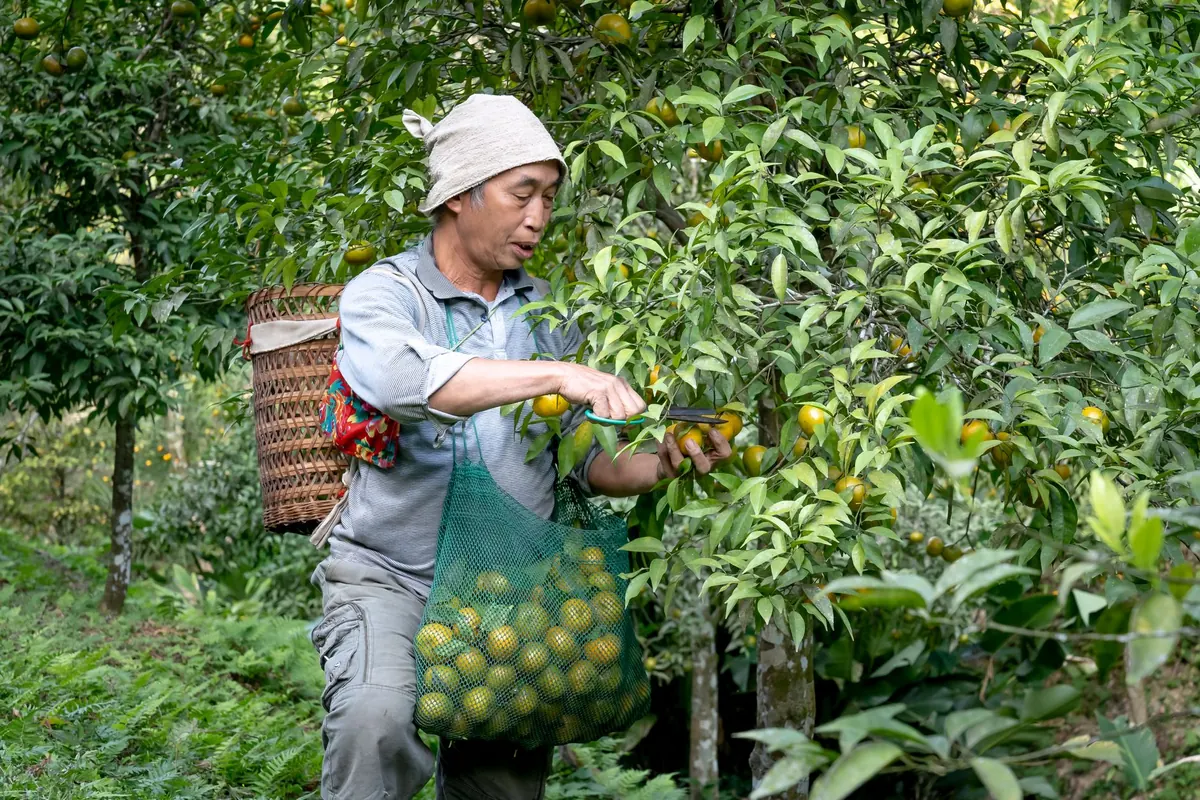
Harvest in dry weather, in the cool of the morning, cutting the stem with secateurs rather than pulling — the crown tears easily and a torn crown is an open door for mould. Fruit keeps for weeks in a cool, dark room and far longer in the fridge. After harvest, ease off the watering and let the wood harden before the cold arrives; soft late growth is the first thing winter damages. Pick up fallen fruit promptly, and do not feed heavily now.
Winter: Protection, Dormant Pruning, and Planning
Established pomegranates in the ground take ordinary frost in their stride. Young trees, container plants and anything planted this year are the ones that need help, and wet, frozen ground does more damage than cold air alone.
- Mound dry mulch or soil around the base of young trunks, and wrap the trunk with fleece, straw or hessian.
- Move containers to a sheltered wall, out of the wind, and raise them onto feet so water drains away.
- Check drainage in heavy soils. A pomegranate sitting in winter water rots quietly and leafs out late and weakly.
- Prune in late winter, on a mild dry day, keeping the same rules as spring: dead wood, suckers, crossing branches, nothing drastic.
- Turn stored fruit and use any that are softening. Sort through the box every couple of weeks.
This is also the season for the jobs that pay off later: ordering bare-root plants or taking hardwood cuttings, repairing supports, and sketching what you will prune and where you might plant the next tree.
The Short Version for the Shed Wall
Spring: prune, clear, feed, mulch. Early summer: watch the flowers, water evenly, walk the tree weekly for pests. High summer: hold the watering rhythm, shade what is exposed. Autumn: test one fruit before you pick the tree, harvest dry, cut don't pull. Winter: protect the young ones, prune lightly in late winter, keep an eye on stored fruit.
A checklist is only a memory aid, not a set of orders. The tree in front of you will tell you more than any calendar: pale leaves, slow growth, cracking skins and dropped blossoms all point at something specific. Use the seasons to know what to look for, then look properly — and most years, the pomegranate will do the rest.
Photo: Quang Nguyen Vinh / Pexels